An open research initiative · est. 2026

Open data and reproducible benchmarks for spine imaging AI.

The OpenSpineConsortium unifies fragmented public imaging collections into carefully documented, openly licensed datasets — so that anatomy-aware machine learning for the spine and pelvis can be built, audited, and trusted.

1,000+
annotated CT volumes [VERIFY]
3
source collections unified
12
abstracts · CNS 2026
19
research contributors
01

The Project

Spine imaging AI has a quiet reliability problem. Most published models are trained and validated on collections that are small, inconsistently annotated, or closed — and they routinely stumble on the anatomy that matters most clinically: transitional vertebrae, segmentation ambiguity, and rare structural variants.

The OpenSpineConsortium exists to fix the foundation. We take existing public CT collections, harmonize their labels under a single coherent scheme, audit them against widely used segmentation tools, and re-release them as documented, openly licensed datasets with fixed cross-validation splits. The goal is simple: make spine and pelvis imaging research reproducible by default.

02

Datasets & Benchmarks

Our datasets are released as benchmark resources — each ships with a data card, machine-readable metadata, and a fixed evaluation protocol so that every reported number is reproducible.

Flagship dataset In submission · 2026 [VERIFY]

CTSpinoPelvic1K

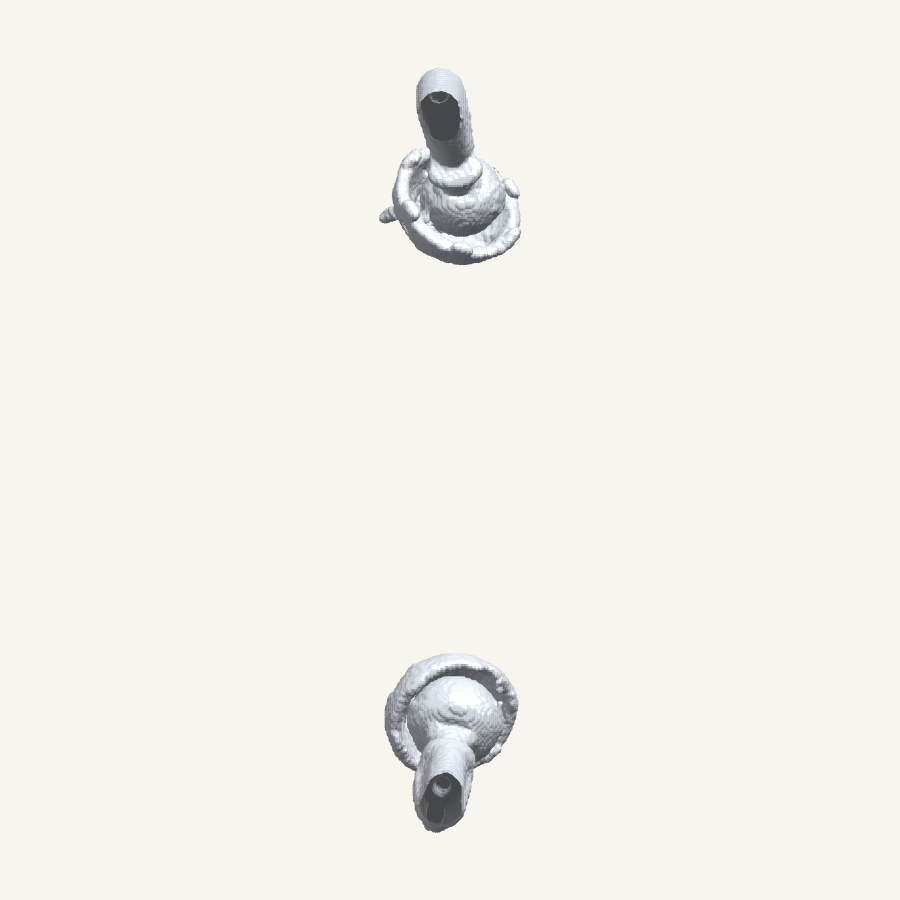
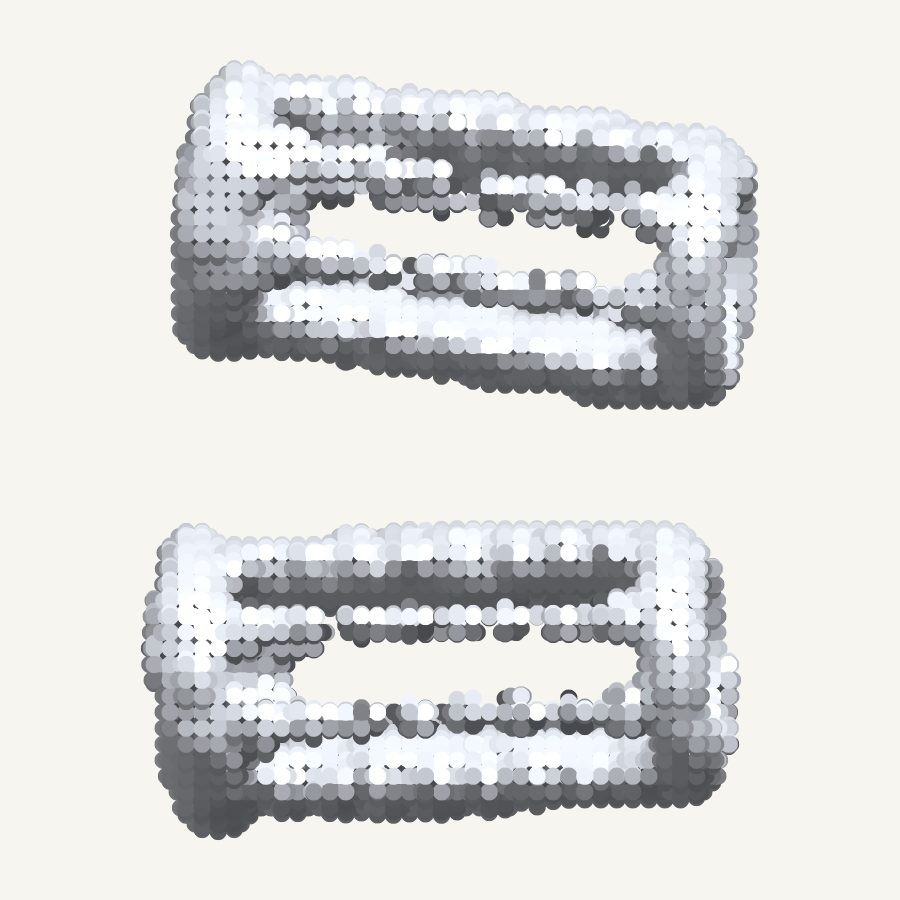
A fused spine-and-pelvis CT segmentation dataset and benchmark that unifies three public collections into a single, anatomy-consistent resource. It is explicitly designed around lumbosacral transitional vertebrae (LSTV), the anatomy where conventional pipelines most often fail.

Benchmark

TotalSegmentator Spine Audit

A structured evaluation of a widely used segmentation tool on transitional and variant anatomy — quantifying where automated labels diverge from expert ground truth.

Pipeline

LSTV Detection Ensemble

A multi-model reference pipeline for detecting lumbosacral transitional vertebrae and Castellvi morphology, released to support variant-aware research and replication.

Methodology

LSTV-Aware Training Recipe

An open training methodology — variant-aware oversampling and per-subgroup evaluation — that makes models accountable for rare anatomy rather than averaging it away.

Built on the shoulders of open science. OpenSpineConsortium resources derive from publicly available collections and are redistributed under the terms of their original licenses. Each dataset card documents provenance, consent basis, and intended use.

03

People

The consortium is a collaborative, student-driven research effort — clinicians, computer scientists, and medical students building computational spine imaging together. Each contributor's scholarly contributions to OSC are listed on their card.

Loading contributors…

Collaborating institutions

04

How We Work

OpenSpineConsortium is an open, GitHub-native research collaboration — not a company and not a closed lab. Everything we publish is meant to be inspected, forked, and improved.

Governance is intentionally lightweight: a project lead coordinates direction, contributors propose changes through public pull requests, and dataset releases are versioned and tagged. Disagreement is resolved in the open, in writing.

  1. 01

    Open by default

    Code, data cards, splits, and evaluation protocols are public. Closed exceptions are documented and justified.

  2. 02

    Reproducible or it doesn't count

    Every benchmark ships with frozen splits and a runnable protocol. A result you cannot reproduce is not a result.

  3. 03

    Clinically grounded

    Priorities are set by what matters at the point of care, with practising clinicians in the loop.

  4. 04

    Responsible data stewardship

    We respect source licenses, document consent basis, and publish Responsible-AI metadata with every release.

05

Education Outcomes

OpenSpineConsortium is also a medical-education model. The same open, asynchronous framework that produces our datasets turns students with little coding or imaging background into contributors with conference-ready scholarship — an outcome we measure rather than assume.

Self-rated competence, before vs. after OSC

Mean participant comfort, 1–5 scale

Loading survey results…

Before joining OSC Now

For program directors & medical educators

Every participant contributes to a live research dataset, builds a reproducible analysis pipeline, and earns authorship on work submitted to a national meeting. Because the model is asynchronous and open-source, it scales across institutions without wet-lab space or one-to-one faculty time as the bottleneck. Participants identified onboarding as the main barrier — a structured, hands-on six-part tutorial series has been added in response.

06

AI Imaging Workshop

A free, hands-on morning on building spine-imaging AI — from reproducible Python and SLURM workflows to running, annotating, and training your own neural networks on the WSU grid. Bring a laptop and follow along.

  1. 9:00 AMBreakfast & social
  2. 9:30 AMPython / SLURM / good programming practices (parallel, reproducible)Tutorial ↗
  3. 10:00 AMDICOM / NIfTI file overviewTutorial ↗
  4. 10:15 AMConvolutional neural networks, nnU-Net, and inference using a pre-trained modelTutorial ↗
  5. 10:45 AMAnnotating using AI-powered ITK-SNAPTutorial ↗
  6. 11:00 AMTraining your own neural network using the WSU gridTutorial ↗
  7. 11:30 AMWriting an AI paper (datasets, evaluations, clinical paper, scoping review)Tutorial ↗
  8. 12:00 PMLunch
07

Goals

What success looks like for the consortium — near-term deliverables and the longer arc.

Release flagship benchmarks

Publish CTSpinoPelvic1K and its evaluation suite as a citable, openly licensed resource for the imaging-AI community.

Audit the tools people trust

Quantify how widely used segmentation tools behave on variant anatomy, and publish the failure modes honestly.

Make rare anatomy first-class

Establish variant-aware training and evaluation as a default expectation, not an afterthought.

Lower the barrier to entry

Give new researchers a clean, well-documented starting point so they can build instead of re-curating data.

Connect institutions

Grow a durable, cross-institutional network around shared open spine imaging infrastructure.

Bridge bench and bedside

Keep every dataset and metric tied to a real clinical question worth answering.

CNS 2026 Annual Meeting — Washington, DC

08

Get involved.

Whether you are a radiologist, an ML researcher, a data engineer, or a clinician with imaging to contribute — there is a place for you here. The consortium grows through public pull requests and open conversation.

Contribute code or data

Open an issue or a pull request on GitHub. Dataset contributions are reviewed against our provenance and licensing checklist.

GitHub organization →

Collaborate on research

Interested in co-developing a benchmark or a study? Reach out to the project lead to start a conversation.

gregory.schwing@med.wayne.edu

Use the datasets

The resources are free to use under their stated licenses. We only ask that you cite the dataset and report on the standard splits.

Browse datasets →